Review the governing plans
Keep the relevant drawings and document basis clear before you price the work.
Plan Intelligence
Bring drawings, notes, schedules, and source-linked scope into one reviewable picture. Understand the work, inspect the evidence, and keep unanswered questions visible.
In development · Discuss the current fit
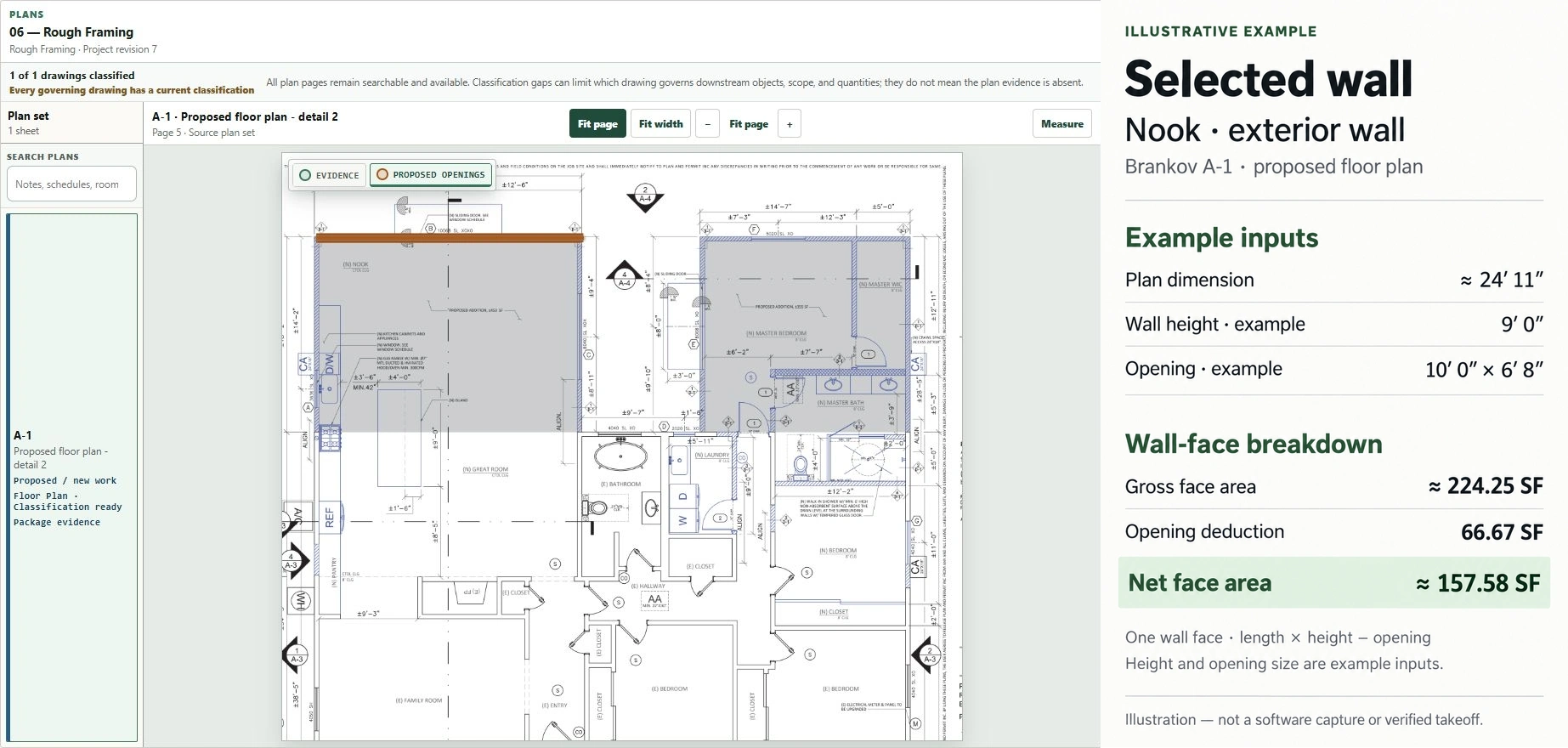
A clearer way to build
The plans.
The basis.
The bid.
Start with the documents and revisions that govern the project.
Bring construction meaning and related evidence into view.
Keep source grounding and numeric verification distinct.
Connect work to its trade, package, and supporting information.
Carry the reviewed work and remaining questions into estimating.
A closer look
A drawing tells part of the story. Notes, schedules, references, and revisions add context. The Workbench keeps the source close to the work so you can inspect the basis and make an informed correction.
The details that matter
The source, the working answer, and your decisions belong together.
Keep the relevant drawings and document basis clear before you price the work.
See the work that has been identified, with uncertainty and open questions beside it.
Follow the relationship between source information and the packages it affects.
Review evidence, qualifiers, and conflicts. Keep the contractor's judgment visible.
Your work. Your judgment.
Automation should help you understand the work. Evidence, unresolved questions, and contractor control remain part of the process.
How the workflow connectsBuilt around the way you work
Tell us about your projects and estimating process. We'll discuss the current product, fit, and access.
In development · Early access by invitation